






About the Episode
About The Episode:
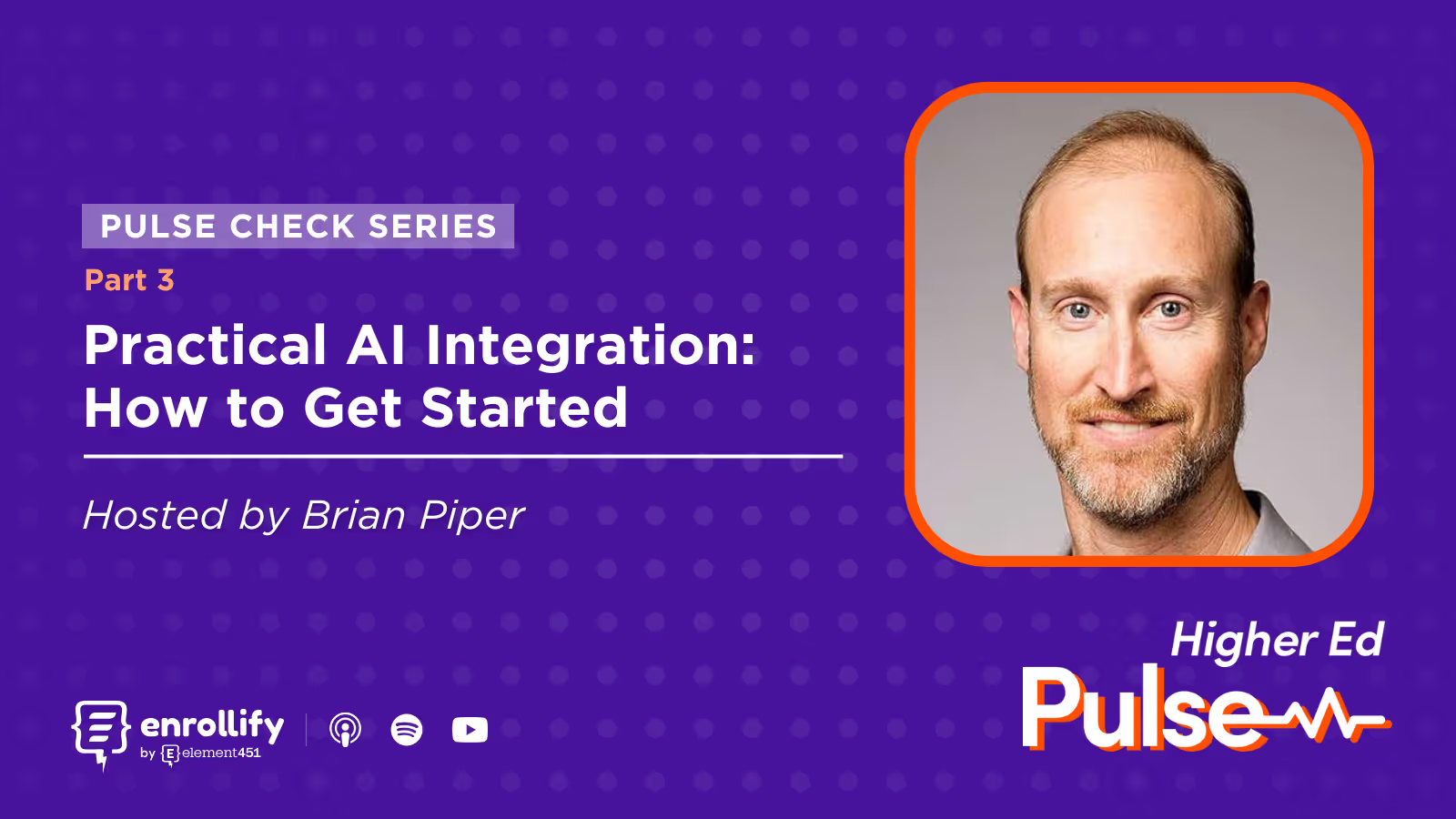
In the final installment of the “Pulse Check” mini-series, Practical AI Integration: How to Get Started (Part 3), host Brian Piper dives into the often-overlooked, yet absolutely essential, elements of AI integration—governance, culture, ethics, and people. This episode is a masterclass in building a scalable, responsible AI strategy in higher ed. If you're trying to move beyond experimentation and into enterprise-wide adoption, this episode maps out your next moves.
Key Takeaways
- AI adoption isn't just about technology—it’s a change management initiative.
- Establish cross-functional AI governance structures to provide direction and reduce fear.
- Start with flexible AI guidelines, not rigid policies, to remain adaptable as tech evolves.
- Prioritize cultural and process readiness before diving into tools or pilot programs.
- Identify simple, high-impact use cases and measure outcomes with both qualitative and quantitative data.
- Transparency, ethics, and human oversight must be baked into every phase of AI implementation.
- Scaling AI means leveraging wins, documenting processes, and continuously evolving governance.
How should higher ed institutions start building strategic AI integration frameworks?
The episode kicks off with a powerful reminder: AI in higher ed isn’t a tech project—it’s a change management process. Brian Piper stresses that successful implementation depends on how institutions approach the people and processes behind the technology, not just the tools themselves. That begins with forming a robust AI governance structure, including an AI council that’s cross-functional and supported by executive leadership. These teams should include representatives from academic affairs, admissions, enrollment, marketing, legal, and more.
What should governance and guidelines for AI look like?
The first formal step for institutions is to draft flexible AI guidelines—principles that encourage exploration while setting clear boundaries. This approach helps institutions stay nimble in an evolving AI landscape. Importantly, institutions should avoid jumping straight into hard policies. These flexible guardrails can prevent inappropriate data use, especially around sensitive student or institutional information. A simple AI council charter can clearly define scope, goals, authority, and ongoing evaluation responsibilities.
How can institutions assess organizational readiness for AI?
Before launching into pilot projects, Brian recommends conducting a thorough readiness assessment. This includes cultural readiness (is there appetite or fatigue around innovation?), technical readiness (is your data clean and infrastructure capable?), and process readiness (are your workflows documented?). He emphasizes documenting current workflows and pain points to identify where AI can have the most meaningful impact.
How should institutions identify and scope AI pilot projects?
Strategic alignment is key—AI projects should be tied directly to institutional goals and current resource planning. When identifying pilots, institutions should focus on high-impact, low-complexity use cases. Think: time-intensive but repetitive tasks with low risk and high visibility. These projects should have clearly defined success metrics, timelines, and ownership. A simple two-by-two matrix (impact vs. complexity) is a helpful visual tool for prioritization.
What’s the right team composition for AI pilot projects?
Brian recommends forming cross-functional teams with an executive sponsor, a project champion, and a mix of AI enthusiasts and skeptics. The team should include subject matter experts, technical support, and end-users. Clarity in roles, communication protocols, and regular updates help the team stay aligned through what will inevitably be a challenging shift in workflows.
How do institutions select and evaluate AI tools?
Choosing the right tool isn’t just about capability. Institutions need to evaluate tool integration, vendor transparency, support availability, cost vs. ROI, and, most critically, data security and compliance. Aligning tools with specific use cases is crucial, and developing a standard question set for vetting vendors can streamline this process.
How should ethics be embedded into AI integration?
Ethical AI use isn’t optional—it’s foundational. Institutions must consider data privacy, bias mitigation, explainability, and human oversight at every step. Importantly, Brian points out that we shouldn’t automate tasks that help junior staff learn or grow professionally. A thoughtful ethics review process, checklists, and regular auditing are critical for maintaining integrity and trust.
What does AI success measurement look like?
Impact measurement should include both hard data (time saved, money saved, output quality) and soft data (user satisfaction, student experience, stakeholder feedback). Start with a baseline, check in often, and conduct post-project evaluations. These insights don’t just track progress—they build trust and support for future AI initiatives.
How do you scale successful AI initiatives across the institution?
Scaling isn’t just repeating what worked—it’s about applying lessons across departments, functions, or user groups. Whether you scale by workflow, domain, or audience, you need supporting materials, documentation, and clear governance updates. And don’t forget to manage resistance—people need safe spaces to learn, fail, and explore AI without fear. Creating internal AI hangouts, communities of practice, and even newsletters can help keep the conversation alive.
Enrollify is produced by Element451 — the next-generation AI student engagement platform helping institutions create meaningful and personalized interactions with students. Learn more at element451.com.
Attend the 2025 Engage Summit!
The Engage Summit is the premier conference for forward-thinking leaders and practitioners dedicated to exploring the transformative power of AI in education.
Explore the strategies and tools to step into the next generation of student engagement, supercharged by AI. You'll leave ready to deliver the most personalized digital engagement experience every step of the way.
👉🏻 Register now to secure your spot in Charlotte, NC, on June 24-25, 2025!




.svg)
.svg)
